

Cart 0
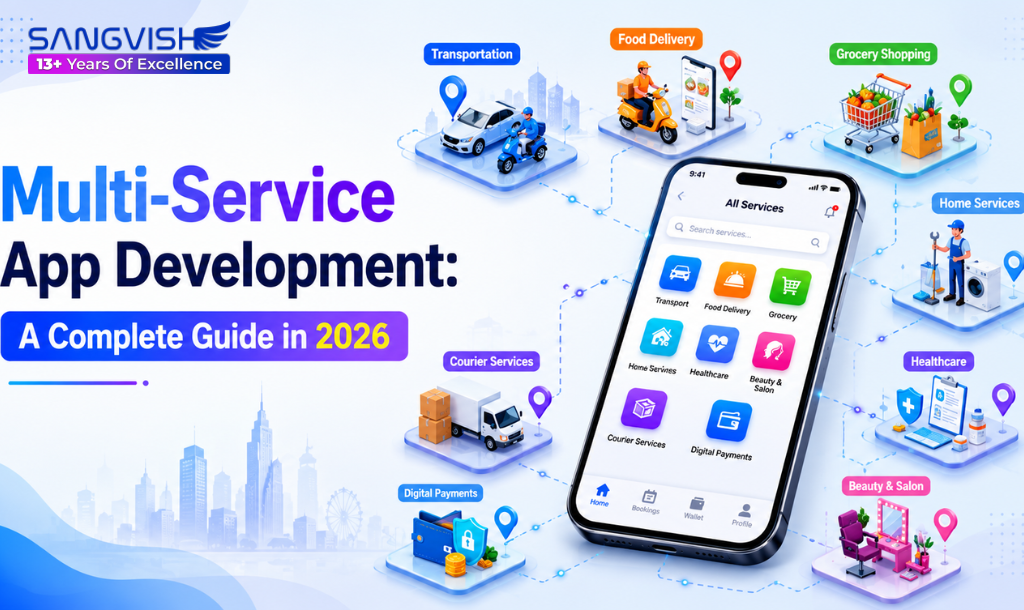
With the growing preference of consumers to have access to multiple services in one mobile application, the demand for multi-service app development is still on the rise. They value the convenience, speed, and digital experience of activities such as booking a ride, ordering food, scheduling home services, and grocery delivery.
Super apps like Gojek have transformed the on-demand economy by offering several apps in one. Everyone can enjoy all the services needed, using one user ID and payment.
If you’re getting ready to create an application with multiple services, or just not in 2026, then read this guide to get all the information you need about critical features, tech stack, development costs, monetization plans, and best practices.
What is a Multi-Service App?
Multi Service App (super App) is an “All in One” application that provides multiple “on-demand” services. They will no longer have to download individual mobile apps for transport, food delivery, grocery shopping, home maintenance, etc., and instead can find them all in one place.
Common services include:
- Ride-hailing/Taxi booking
- Food delivery
- Grocery delivery
- Parcel and courier services and operations.
- Cleaning and upkeep of the home.
- Things to wear for a gorgeous beauty salon appointment.
- Healthcare consultations
- Pharmacy delivery
- E-commerce & Online shopping.
Make payments via digital wallet and bill payments. Using a digital wallet and paying bills.
By streamlining the digital experience, companies can significantly boost customer retention and unlock more lucrative revenue opportunities from every user interaction.
Why is investing in Multi-Service App Development in 2026 advisable?
With customers now looking for digital experiences that are more rapid and convenient, the on-demand economy is likely to keep expanding. These are some of the business benefits of super app development:
Improves customer retention rate: With several services available on the same app, customers are spending more time in the app.
Several revenue sources: Commissions, subscriptions, ads, delivery fees and premium memberships.
Better customer experience: One sign in and one payment system and tracking system makes it easier for customers.
Scalability: Begin with one or two services and then grow according to the number of customers.
More visibility: An all-encompassing platform will provide greater visibility.
Competitive Advantage: A multi-service platform attracts a broader audience than single-service apps.
Essential Features of a Multi-Service App
To build a successful app like Gojek, your platform must include essential features for different stakeholders. These features ensure smooth operations, user satisfaction, and business growth.
User App Features
- Registration & Login: Users can quickly sign up using email, phone number, or social media accounts, ensuring easy access.
- Service Selection: Clearly categorized services make it simple for users to find what they need without confusion.
- Real-Time Tracking: Users can track rides, deliveries, or service providers on a live map, increasing transparency.
- Payment Integration: Multiple secure payment options like wallets, cards, and UPI make transactions convenient.
- Ratings & Reviews: Feedback helps users share experiences while improving service quality for future customers.
- Push Notifications: Timely updates about bookings, promotions, or reminders keep users engaged with the app.
Service Provider App Features
- Registration & Verification: Service providers upload documents for verification to maintain platform trustworthiness.
- Service Requests: Providers can accept or reject tasks in real-time, giving them control over their schedule.
- Earnings Dashboard: A dedicated dashboard shows completed tasks, total earnings, and payouts clearly.
- Navigation & Route Optimization: Integrated maps help providers reach clients efficiently, saving time and fuel.
- Ratings & Feedback: Providers can receive reviews from users to improve service quality and reliability.
Admin Panel Features
- Dashboard Analytics: Admins get real-time insights into users, service demand, and revenue trends for informed decisions.
- Service Management: Easily add, update, or remove service categories to keep the platform relevant.
- User Management: Monitor and manage both users and service providers effectively for smooth operations.
- Payment Management: Track all transactions, commissions, and payouts accurately for financial transparency.
- Promotions & Discounts: Admins can run campaigns, special offers, or seasonal discounts to attract and retain users.
Benefits of a Multi-Service App Development
Developing a multi-service app offers numerous advantages for businesses, service providers, and users alike. Here are the key benefits:
1. Convenience for Users
Users can access multiple services in a single app, saving time and effort. They no longer need to download separate apps for rides, food, or home services.
2. Increased Customer Retention
Offering a variety of services keeps users engaged within the app, reducing churn and improving loyalty over time.
3. Diversified Revenue Streams
Businesses can earn from multiple sources—commissions, subscriptions, advertisements, and in-app purchases—making revenue more stable and scalable.
4. Better Resource Management
Service providers can manage requests, routes, and payments efficiently through the app, improving operational efficiency and reducing delays.
5. Competitive Advantage
A single platform offering multiple services positions your business as a convenient and comprehensive solution, attracting more users than single-service apps.
6. Real-Time Insights
Admins can monitor analytics like service demand, revenue, and user activity, helping make informed decisions to improve performance and growth.
Multi-Service App Development Process
Building the app using a cross-platform development framework like Flutter or React Native can also contribute to saving development time and the application’s optimal performance on Android and iOS.
- Conduct Market Research
Get to know your market, understand your customers’ problems and learn about your competitors.
- Create a Business Model Definition
Identify first products to launch (ride hail, food delivery, home services etc.) and ready to scale post-launch.
- Create an easy-to-use UI/UX
Create an intuitive, simple, and streamlined user interface and booking systems, as well as a responsive design.
- Develop an MVP
Create an MVP – the minimum viable product – with minimum functionality in order to test the concept, collect feedback and mitigate risks.
- Integrate Essential APIs
Ensure seamless functionality by using payment gateways and GPS tracking, notifications, authentication and analytics tools.
- Test Thoroughly
Run your functions, security, usability and performance tests for the best possible user experience.
Here’s the party section! The actual fun is to launch and market your app!
For instance, you can upload your app to Google Play Store and Apple App Store and
promote your app on social media, referrals and online marketing campaigns.
- Monitor and Improve
Adopt user feedback, make changes, and always strive to make improvements to keep them competitive.
Monetization Strategies
You can generate revenue through multiple streams:
💰 Commission on Services: Earn a percentage from each completed task.
💰 Subscription Plans: Offer a premium membership for added benefits.
💰 Advertisements: Promote partner brands within the app.
💰Surge Pricing: Charge extra during peak hours for certain services.
Challenges in Multiservice App Development
While multiservice apps offer significant opportunities, there are challenges to address:
📌 Complex Backend Architecture: Managing multiple services requires scalable backend systems.
📌 User Retention: Keeping users engaged with multiple services can be tricky.
📌 Payment Security: Secure transactions are critical to gain user trust.
📌 Regulatory Compliance: Depending on services offered, legal compliance may vary by region.
💰 How Much Does It Cost to Develop a Multi-Service App?
The cost of developing a Multi-Service app depends on factors such as features, design complexity, and the chosen platform. On average, it ranges from $30,000 to $100,000 for a fully functional MVP. The final price may vary based on customization, third-party integrations, and regional development rates.
⏱️ How Long Does It Take to Develop a Multi-Service App?
Typically, it takes 3–6 months to build a Minimum Viable Product (MVP) and around 6–12 months for a fully featured multi-service app with multiple integrated modules like ride-hailing, delivery, and home services.
🧩 Can I Add New Services After Launching the App?
Yes! Multi-service apps are designed to be highly scalable. You can easily add new services, categories, and features post-launch as your business grows or based on customer feedback and market demand.
🌟 How Can I Ensure My Multi-Service App Stands Out in the Market?
To make your app stand out, prioritize a smooth UI/UX, reliable service delivery, and real-time tracking. Strengthen customer loyalty with personalized offers, loyalty programs, or unique service bundles. Consistent app updates and responsive customer support also build long-term trust.
Final Thoughts
The on-demand services industry continues to grow in 2026, and a multiservice app is your ticket to tapping into this booming market. By combining convenience, scalability, and multiple revenue streams, your platform can attract a wide audience and generate sustainable growth.
With careful planning, smart technology choices, and a focus on user experience, you can develop an app like Gojek or Uber that stands out in today’s competitive landscape.