



Cart 0
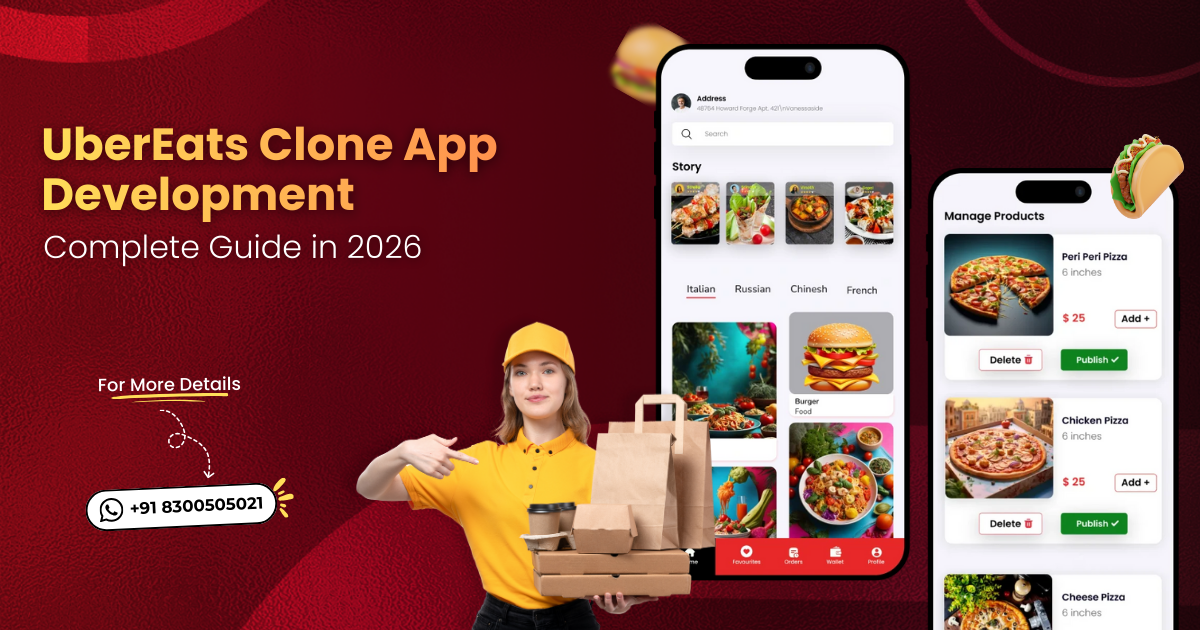
By 2026, the food delivery sector will have embarked on a transformative journey, driven by convenience, localized demand, and swift digital advancements.
Today’s consumers anticipate quick deliveries, easy ordering processes, cashless transactions, and the ability to track their orders in real-time with minimal effort.
Consequently, various businesses, from small eateries to cloud kitchens and major franchises, are eager to enter this expanding online marketplace.
In this landscape, an UberEats Clone presents a revolutionary option. Entrepreneurs can bypass the lengthy development time and significant financial investment typically required to create a food delivery application from scratch.
Utilizing an UberEats Clone Script enables the launch of a fully developed, versatile, and customizable food delivery service within a matter of days.
Whether your goal is to create a local delivery application in your area, scale it across different regions, or establish a new global platform, adopting an Uber Eats-like framework is the quickest route to achieving success in 2026.
This comprehensive guide will cover all aspects necessary for building your own UberEats Clone App, including essential features, business models, geo-targeting strategies, monetization opportunities, development expenses, and insights into why 2026 is an ideal time for launching.
What Is an UberEats Clone?
UberEats clone is a ready-to-use, adjustable software package, often referred to as a “script,” that mimics the essential characteristics and operations of the well-known UberEats food delivery service.
This enables business owners to swiftly establish their own food delivery brand without the need to create everything from the ground up. It generally consists of applications for customers, restaurants, and delivery drivers, in addition to an administrative dashboard for oversight.
This solution provides a quick method to penetrate the on-demand delivery sector with functionalities such as real-time tracking, secure payment options, and order management capabilities.
It comes with:
➤ User App
➤ Restaurant Partner App
➤ Delivery Driver App
➤ Admin Dashboard
➤ Optional Website Ordering
It allows users to browse restaurants, place orders, track deliveries, and make secure payments in real time—just like UberEats, DoorDash, Zomato, or Grubhub.
What is Ubereats Clone Script?
A UberEats clone script is a market-ready software solution that replicates the advanced features and functionalities of UberEats. It ensures the startups can launch their own food delivery app at a cost-effective.
These scripts provide comprehensive adaptability, allowing customization of the solution according to the target audience, business objectives, and brand identity.
Usually, it encompasses applications for customers, restaurants, and drivers, along with an administrative panel to oversee the whole process, including real-time tracking, payment processing, order management, and analytics.
Why is the Food Delivery App the Best for Launch in 2026?
The year 2026 presents a unique opportunity for entrepreneurs seeking to enter the on-demand food delivery sector. As consumer demands, technology, and business strategies rapidly transform, it is an ideal moment to introduce a food delivery application.
📌 Rapid Expansion in On-Demand Services
The global food delivery market is experiencing unprecedented growth. By 2026, an increasing number of customers will depend on delivery applications as their main method for ordering meals, providing a built-in audience for new businesses.
📌 Accessible Technology at Lower Costs
Tools like artificial intelligence, automation, enhanced GPS tracking, data analytics, and cloud solutions are now more affordable than ever. This accessibility allows for the development of high-performing food delivery apps at reduced costs in 2026.
📌 A Move Towards Convenience & Digital Living
Today’s consumers favor quick, hassle-free experiences facilitated by apps. As busy lifestyles and the trend of working from home continue to grow, the appetite for straightforward food ordering is on the rise, making 2026 a year with high demand.
📌 Enhanced Logistics & Delivery Systems
Advancements in road infrastructure, quicker internet access, increased acceptance of UPI, and digital payment systems contribute to smoother operations. Launching in 2026 means facing fewer obstacles in delivery and achieving greater efficiency.
📌 Record-Level Restaurant Collaborations
Restaurants are increasingly leaning towards digital-first strategies and seek dependable delivery partners with competitive pricing, giving newcomers an excellent opportunity to forge strong partnerships swiftly.
📌 Market Opportunities for Innovations
Despite the presence of major players, there remains a readiness among consumers to explore niche alternatives such as:
➤ Hyperlocal delivery
➤ Healthy meal shipment
➤ Subscription-driven food delivery
➤ Economically friendly delivery applications
This creates vast opportunities for emerging startups in 2026.
📌 Significant Profit Potential with Scalable Development
The food delivery industry is recognized as one of the quickest-growing fields and is relatively easy to scale. Launching in 2026 allows your application to develop steadily in line with consistent user patterns and expected demand.
How Does an UberEats Clone App Work?
An app that replicates the functionality of UberEats operates by linking customers, restaurant establishments, and delivery personnel through three interconnected applications. This setup enables users to locate restaurants in their vicinity, place food orders, make secure payments, and monitor deliveries in real-time. Restaurants handle incoming orders and manage their menus, while delivery drivers are responsible for picking up and delivering meals. All these activities are orchestrated by a centralized system that utilizes GPS, notifications, and integrated payment solutions.
🔹 Customer Application
▸ Searching & Ordering: Users create an account, input their location, explore local restaurants and menus, select items for their cart, and personalize their orders.
▸ Payment Process: Secure transactions are carried out through integrated payment gateways such as credit cards and digital wallets.
▸ Delivery Tracking: Customers receive live updates and can view the driver’s location on a mapping interface.
🔹 Restaurant Application (Merchant Application)
▸ Order Oversight: Businesses receive incoming orders, can choose to accept or decline them, and update the status of orders (preparation, ready for pickup).
▸ Menu and Store Management: Adjust menus, availability of items, business hours, and promotional offers.
🔹 Delivery Driver Application
▸ Alert System: Receive notifications for new delivery assignments.
▸ Route Planning: Utilize onboard navigation tools, such as Google Maps, to determine the quickest routes to both the restaurant and the customer.
▸ Order Execution: Confirm order acceptance, notify of pickup, and update status during the delivery process.
Essential Features of a 2026-Ready UberEats Clone
A contemporary food delivery service needs to leverage efficient, easy-to-use technology that operates smoothly. The following are essential features designed to enhance performance and boost conversion rates.
User App Features
➥ Effortless Onboarding and Personalization: Simple sign-up via social media or email; dynamic dashboards powered by AI showcasing trending products and tailored suggestions.
➥ Intelligent Search and Filtering: Options to search by cuisine, location, ratings, dietary requirements, and enhanced menu descriptions through AI.
➥ Smooth Ordering Process: Unified cart, straightforward menu navigation, adjustable orders, and a multitasking tracker.
➥ Multiple Secure Payment Methods: Accepts credit cards, UPI, digital wallets, and potentially cryptocurrency, all secured with robust encryption.
➥ Live Tracking and Communication: GPS-enabled, with live map guidance and in-app options to chat or call with the delivery partner.
➥ Feedback and Ratings: Comprehensive review system along with AI-generated summaries reflecting customer opinions about restaurants.
➥ Future Delivery Scheduling: Capability to arrange orders for later dates.
Restaurant Partner App
➥ Order Handling: Get, oversee, and adjust order statuses in real-time.
➥ Menu Oversight: Revise items, pricing, availability, and utilize AI to enhance descriptions/photos.
➥ Data & Insights: Information on sales, performance metrics, and customer reviews.
Delivery Driver App
➥ Immediate Order Notifications: Quick alerts and simple options to accept or decline.
➥ Streamlined Navigation: Live route optimization for quickest delivery.
➥ Income Tracker: Monitor earnings, bonuses, and past records.
➥ Status Toggle: Effortless online/offline availability.
➥ In-App Messaging: Convenient communication with customers or restaurants.
Business Models You Can Build Using an UberEats Clone
Your food delivery application can adopt various revenue strategies:
1. Commission-Based Approach (Most Common)
Restaurants remit a set commission for each order that is successfully completed.
2. Delivery Charge Model
Customers incur a delivery fee that varies based on distance, location, or peak hours.
3. Subscription / Membership Option
Sangvish Prime Delivery Pass → Offers unlimited free deliveries for a monthly or yearly subscription fee.
4. Promoted Listings
Restaurants can pay to secure higher visibility in search results.
5. Advertising
Generate extra income by incorporating advertisements within the application.
This versatility enables your business to expand rapidly across different regions.
How to Launch Your UberEats Clone App in 2026?
To quickly initiate your live launch, follow these steps:
▸ Step 1: Select your desired location
Determine if you will focus on one city or expand to several.
▸ Step 2: Identify the appropriate UberEats Clone script
Look for options that provide scalability, customization, and robust technical support.
▸ Step 3: Personalize the application
Modify elements such as the brand name, logo, color scheme, features, restaurant categories, and payment methods.
▸ Step 4: Recruit restaurant partners
Concentrate on local eateries first, as they are quicker to onboard.
▸ Step 5: Hire or integrate delivery partners
Provide incentives during the initial launch phase.
▸ Step 6: Conduct testing and a soft launch
Verify seamless operation, security of payments, and accuracy of GPS.
▸ Step 7: Execute a full-scale launch with marketing efforts
Leverage social media advertising, influencer collaborations, and coupon promotions.
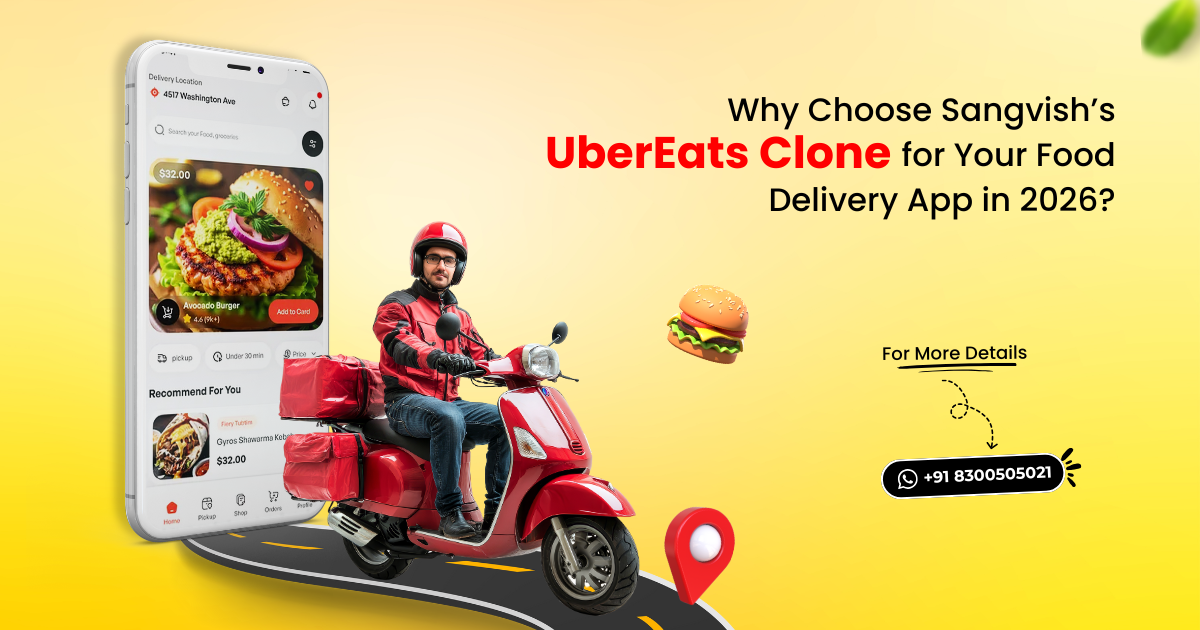
Why Choose Sangvish’s UberEats Clone for Your Food Delivery App in 2026?
Sangvish offers a comprehensive and contemporary UberEats Clone designed for optimal performance and quick adaptations.
Primary benefits:
▸ Immediately available solution
▸ Fully customizable
▸ Facilitates single-city and multi-city growth
▸ Supports multiple languages and currencies
▸ Includes geo-fencing and region-specific restaurant mapping
▸ Cost-effective pricing
▸ Robust admin control panel
▸ Specialized technical assistance
Whether you are starting a local food delivery business or managing a multi-city food marketplace, Sangvish provides an ideal platform to rival leading brands.
Cost of Building an UberEats Clone in 2026
Constructing a platform from the ground up may require an investment ranging from $50,000 to $300,000, influenced by the level of complexity involved. In contrast, acquiring a pre-developed UberEats Clone Script is much more economical and provides several advantages, such as:
▸ Quicker development time
▸ Comprehensive feature testing
▸ Built-in user, restaurant, and driver interfaces
▸ Lower operational risks
As we approach 2026, utilizing clone-based development stands out as a wise choice for business owners.
Final Thoughts: Start Your Food Delivery Journey in 2026
The food delivery sector is expanding swiftly, making this year an excellent opportunity to establish your own service. With a robust UberEats Clone, you can:
▸ Launch promptly
▸ Cut down on development expenses
▸ Easily expand your business
▸ Focus on local and international markets
▸ Incorporate up-to-date features that consumers desire
Whether your goal is to innovate within your community’s food scene or create the next leading food delivery service, the moment to take action is now. Your envisioned food delivery venture is just a stride away.

You may also like
How to Launch a Food Delivery App Like Grubhub?
How to Launch a Food Delivery App Like Grubhub?
The food delivery industry has been growing rapidly in the past few years, with apps...
How to Build a Doordash Clone App?
How to Build a Doordash Clone App?
Hey, do you want to develop your own on-demand food delivery app like Doordash? Don't...