




Cart 0

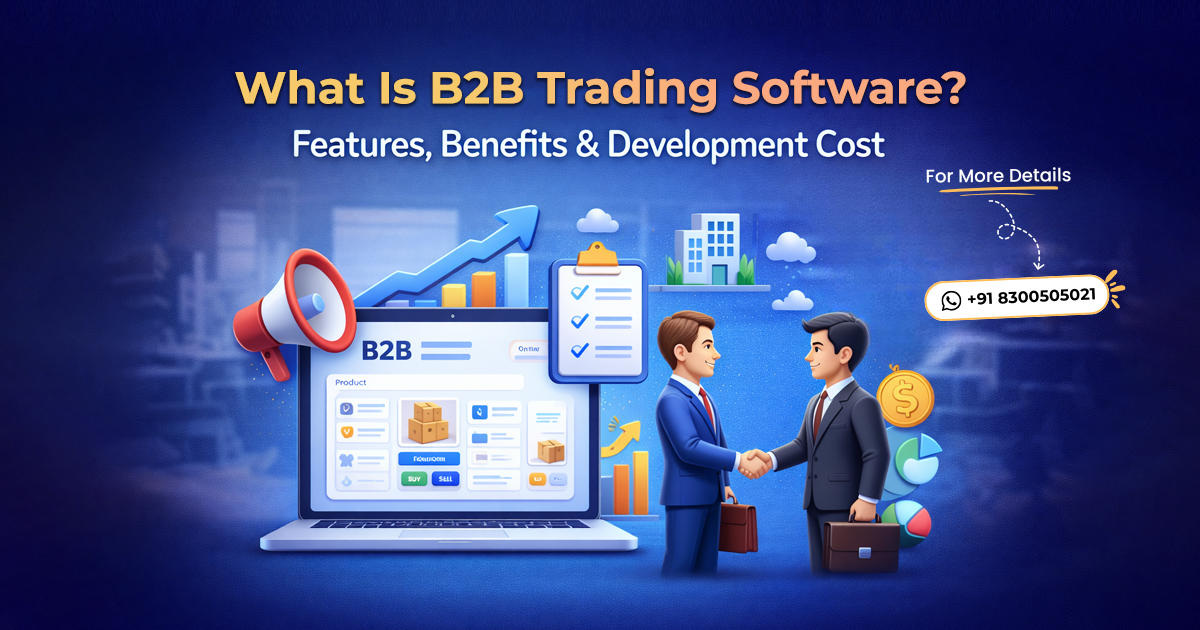
One of the most powerful tools enabling this transformation is B2B trading software. Whether you’re a wholesaler in the USA, a manufacturer in India, or a distributor in Southeast Asia, B2B trading platforms help streamline business operations, reduce manual work, and scale global trade.
In this guide, we will explain what B2B trading software is, its key features, benefits, development cost, and how businesses in the US and Asian markets are using it to grow faster.
What Is B2B Trading Software?
B2B trading software is a digital platform that allows businesses to buy and sell products or services directly with other businesses online.
It enables manufacturers, suppliers, wholesalers, and distributors to manage bulk orders, pricing, payments, and supply chain operations through a single system.
Unlike B2C platforms that sell to individual customers, B2B platforms focus on large volume transactions, negotiated pricing, and long-term partnerships.
Examples of global B2B trading platforms include:
- Alibaba
- Global Sources
- IndiaMART
- TradeIndia
- Amazon Business
Companies in North America, India, China, Singapore, Malaysia, and the Middle East are increasingly investing in custom B2B trading platforms to improve their supply chain and expand international trade.
How Does B2B Trading Software Work?
B2B trading software connects buyers and suppliers through a centralized platform where they can manage transactions digitally.
Typical workflow includes:
- Suppliers register and upload product catalogs
- Buyers search for products or suppliers
- Businesses request quotes or place bulk orders
- Negotiation and pricing agreements happen within the platform
- Payment processing and order tracking are managed online
- Delivery and logistics are coordinated through integrated systems
This digital ecosystem helps businesses reduce manual processes and improve transaction efficiency.
Key Features of B2B Trading Software
A well-designed Alibaba Clone App includes several powerful features that support large-scale commercial transactions.
Multi-Vendor Marketplace
Allows multiple suppliers and manufacturers to list products on the same platform, enabling buyers to compare prices and suppliers easily.
Product Catalog Management
Businesses can upload and manage thousands of products with bulk pricing, specifications, and inventory details.
Bulk Order Management
Supports large orders, minimum order quantities (MOQ), and customized pricing structures.
Request for Quote (RFQ) System
Buyers can request quotes from suppliers, allowing negotiation before finalizing purchases.
Secure Payment Integration
Supports multiple payment methods including:
- Bank transfers
- International payment gateways
- Credit terms for trusted partners
Inventory and Supply Chain Management
Helps businesses track stock levels, shipping status, and supplier availability.
Analytics and Business Insights
Advanced dashboards provide insights into:
- Sales performance
- Buyer behavior
- Product demand trends
Benefits of B2B Trading Software
Implementing a B2B trading platform provides several advantages for businesses operating in global markets.
Global Market Expansion
Companies can reach international buyers and suppliers, opening new revenue opportunities in the USA, Asia, Europe, and the Middle East.
Faster Order Processing
Automated workflows significantly reduce the time needed to process orders and manage transactions.
Improved Supplier Relationships
Integrated communication tools help businesses maintain long-term supplier partnerships.
Cost Reduction
Digital platforms eliminate manual paperwork and reduce operational costs.
Better Inventory Management
Businesses can track inventory in real time and avoid stock shortages or overstocking.
Scalable Business Growth
B2B trading software allows businesses to scale operations without increasing administrative workload.
Industries Using B2B Trading Platforms
B2B trading platforms are widely used across several industries in the United States and Asian markets.
Common industries include:
- Manufacturing
- Wholesale distribution
- Electronics
- Automotive parts
- Textiles and apparel
- Agriculture products
- Construction materials
- Medical equipment
For example, manufacturers in China or India often connect with wholesale buyers in the United States through B2B marketplaces.
Development Cost of B2B Trading Software
The cost of developing alibaba clone script depends on several factors, including platform complexity, features, and development location.
Here is an estimated cost breakdown.
| Development Type | Estimated Cost |
| Basic B2B Platform | $15,000 – $30,000 |
| Mid-Level Marketplace | $30,000 – $70,000 |
| Advanced Enterprise Platform | $70,000 – $150,000+ |
Factors affecting cost include:
- Number of features
- Marketplace functionality
- Mobile app integration
- Payment gateway integration
- AI-based analytics
- Cloud infrastructure
Development costs may be lower in Asian countries like India or Vietnam compared to the USA, which is why many companies outsource development.
B2B Trading Software Development Process
Developing a B2B trading platform involves several stages.
Market Research
Understanding industry requirements and identifying target users.
Platform Architecture
Designing a scalable system that supports multiple vendors and large transactions.
UI/UX Design
Creating a user-friendly interface for buyers, sellers, and administrators.
Development
Building core modules such as product management, order management, and payment systems.
Testing
Ensuring the platform is secure, stable, and optimized for performance.
Launch and Maintenance
Deploying the platform and providing ongoing updates and technical support.
Future of B2B Trading Platforms
The global B2B eCommerce market is expected to grow rapidly in the coming years. Businesses are increasingly adopting technologies such as:
- Artificial Intelligence
- Blockchain for supply chain transparency
- AI-based pricing optimization
- Automated procurement systems
In regions like North America, India, China, and Southeast Asia, digital B2B platforms are becoming essential for companies looking to remain competitive in international trade.
Conclusion
B2B trading software is transforming how businesses buy and sell products across global markets. By enabling digital transactions, automated workflows, and supplier connectivity, these platforms help businesses expand internationally and improve operational efficiency.
Companies in the USA and Asian markets are increasingly investing in custom B2B trading platforms to stay competitive in the evolving digital economy.
If you’re planning to launch a B2B marketplace or digital trading platform, investing in the right software solution and development strategy can significantly accelerate business growth.
You may also like
Right B2B Trading Script to Take Your Business to the Next Level
Right B2B Trading Script to Take Your Business to the Next Level
B2B trading platforms have become the backbone of efficient and streamlined transactions in the current...

Best B2B Multi Vendor Marketplace Script for your Business
Best B2B Multi Vendor Marketplace Script for your Business
A B2B multi vendor marketplace script lets you build a platform that allows multiple vendors to...