




Cart 0
The transportation and delivery industry is evolving faster than ever. In 2026, businesses are adopting AI-powered automation, real-time shipment tracking, and smart fleet systems to stay competitive.
If you’re planning to build a logistics service app, this complete guide explains the features, technology stack, development cost, and monetization strategies you need to know.
📦 Why Invest in a Profitable Logistics Service App in 2026?
The world logistics market is growing as a result of:
• Rapid eCommerce growth
• Ecommerce Growth are increased rapidly.
• International trade has developed day by day.
• AI is used to optimize the supply chain.
Leading companies like Uber, FedEx, and DHL have already proven that digital logistics platforms improve operational efficiency and customer satisfaction.
👉 A logistics service app enables businesses to manage orders, drivers, fleets, warehouses, and payments — all from one centralized dashboard.
🚀 Step-by-Step Guide to Develop a Logistics Service App
1️⃣ Choose Your Logistics Business Model
Before starting development, clearly define your target market and service niche.
The right business model determines your revenue strategy, features, and scalability.
➤ B2B Logistics Platform
• Designed for businesses that need bulk transportation and supply chain solutions.
• Ideal for manufacturers, wholesalers, and enterprise shipment management.
➤ B2C Courier & Parcel Delivery
• Focused on delivering parcels directly to individual customers.
• Perfect for eCommerce stores and local courier service providers.
➤ On-Demand Delivery Service
• Offers same-day delivery services akin to local logistics services.
• Most suitable to the medicine, food, grocery, parcel and same-day delivery companies.
➤ Fleet Management System
• Helps companies track and manage their own vehicles and drivers.
• Improves route planning, fuel monitoring, and operational efficiency.
➤ Freight Booking Marketplace
• Connects shippers with truck owners or transport carriers digitally.
• Streamlines load booking, pricing, and real-time freight tracking.
➤ Multi-Vendor Logistics Service App
• Allows multiple logistics providers to operate within one platform.
• Supports commission-based revenue and large-scale expansion.
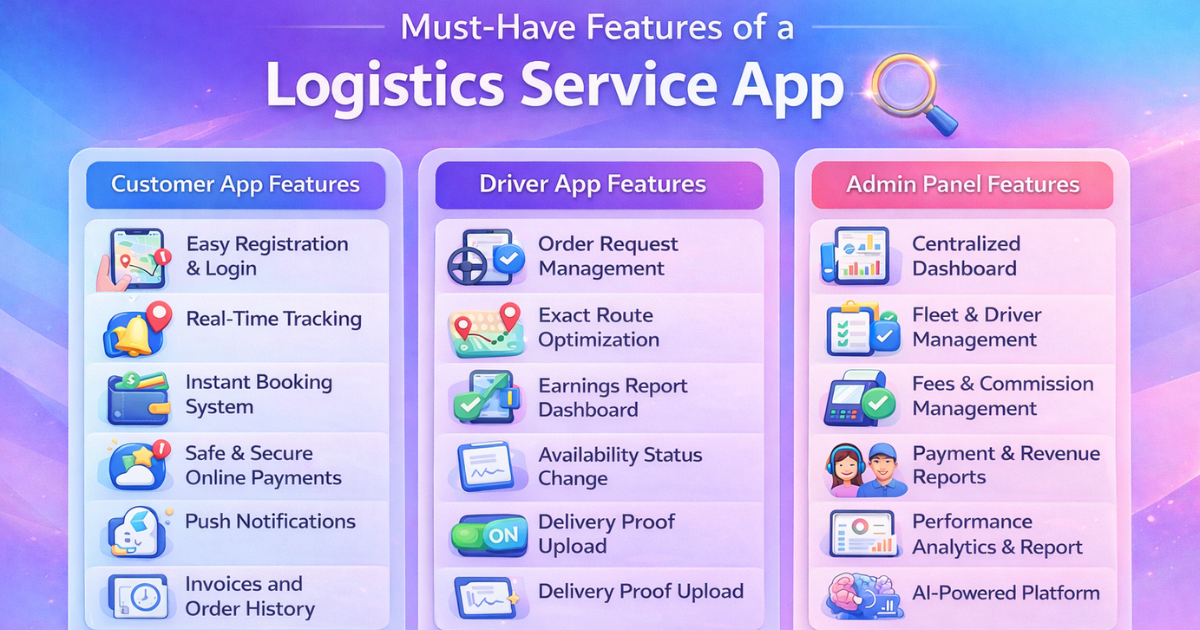
2️⃣ Must-Have Features of a Logistics Service App
👤 Customer App Features
Easy Registration & Login
• Allows users to quickly create an account using email, phone number, or social login.
• A smooth onboarding process improves user retention and reduces drop-offs.
Real-Time Tracking
• Enables customers to track their shipment or driver location live on the map.
• This increases transparency and builds trust in your logistics service app.
Instant Booking System
• Users can schedule or request delivery services in just a few taps.
• It ensures faster order placement and a seamless customer experience.
Estimated Delivery Time (ETA)
• Displays accurate delivery time predictions using smart algorithms.
• Helps customers plan better and reduces uncertainty.
Safe & Secure Online Payments
• Supports multiple payment options like cards, UPI, wallets, and net banking.
• Ensures safe, encrypted transactions on the platform.
Push Notifications
• Sends instant alerts about booking confirmation, driver assignment, and delivery status.
• Keeps customers informed at every stage of the delivery process.
Invoices and Order History
• Stores previous bookings, receipts, and transaction details in one place.
• Makes rebooking easy and improves record management for users.
🚛 Driver App Features
Order Request Management
• Drivers receive and accept delivery requests directly through the app.
• This streamlines communication and reduces manual coordination.
Exact Route Optimization
• Suggests the fastest and most fuel-efficient routes using AI and GPS data.
• Helps reduce delivery time and operational costs.
In-App Navigation
• Provides built-in navigation support without switching to other apps.
• Ensures smoother deliveries with real-time traffic updates.
Earnings Report Dashboard
• Shows daily, weekly, and monthly revenues. Inspires drivers with the clear knowledge of earnings.
Availability Status Change
• Allows drivers to switch between online and offline modes.
• Gives drivers the option of online and offline modes.
Delivery Proof Upload
• Drivers can upload photos or digital signatures as proof of delivery.
• Reduces disputes and increases accountability.
🖥️ Admin Panel Features
Centralized Dashboard
• Provides a complete overview of orders, drivers, revenue, and performance metrics.
• Helps administrators monitor operations in real time.
Fleet & Driver Management
• Allows tracking, assigning, and managing vehicles and drivers efficiently.
• Improves operational control and workforce coordination.
Fees & Commission Management
• Enables setting and modifying commission rates for drivers or vendors.
• Supports flexible revenue models within the logistics service app.
Payment & Revenue Reports
• Generates detailed financial reports and transaction summaries.
• Helps in accounting, auditing, and business forecasting.
Performance Analytics
• Measures the speed of delivery, efficiency of the drivers, and customer satisfaction.
• Offers factual information to enhance service delivery.
AI-Powered Platform
• Applies artificial intelligence to forecast demand and streamline logistics activities.
• Improves the decision making and enhances efficiency.
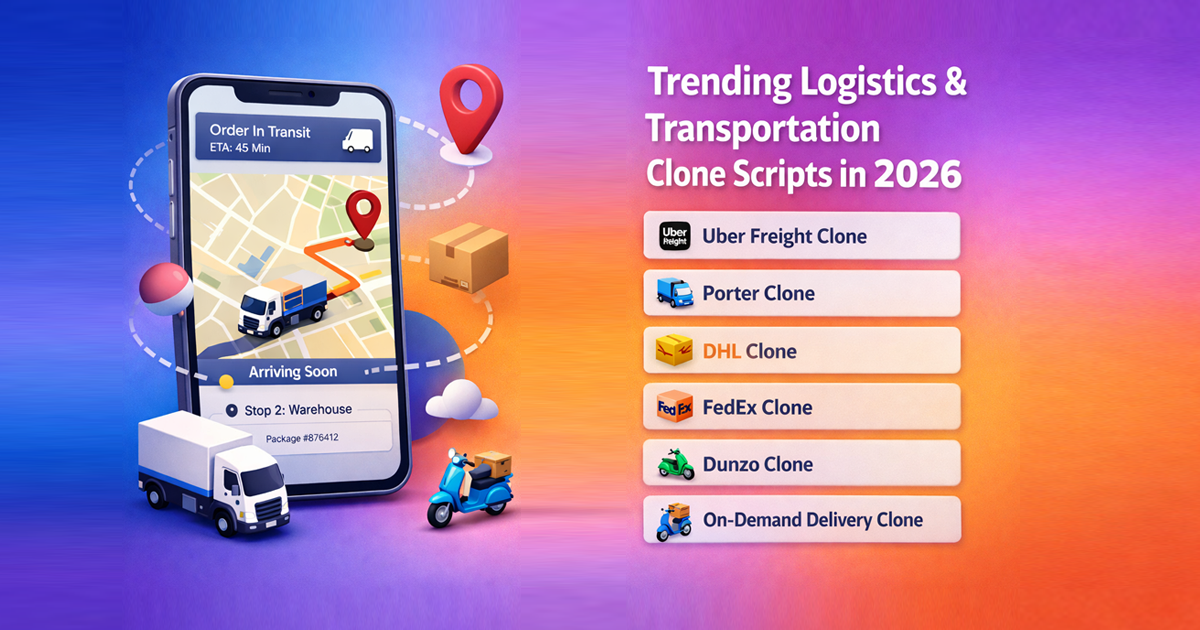
🔥 Popular Logistics & Transportation Whitelable Models
Many startups launch faster using proven business models inspired by successful platforms.
🚛 Uber Freight Clone
Best for freight marketplace platforms and truck booking systems.
🚚 Porter Clone
Ideal for hyperlocal goods transport and SME logistics services.
🚀 FedEx Clone
Perfect for express delivery startups and same-day services.
🏍 On-Demand Delivery Clone
Great for last-mile, grocery, and city-based logistics startups.
🚀 Benefits of Launching a Logistics Service App
Launching a logistics service app can transform traditional transportation operations into a smart, scalable, and profitable digital business. Here are the key benefits:
📦 Improved Operational Efficiency
- Automates order management, dispatching, and route planning in real time.
- Reduces manual errors while speeding up overall logistics operations.
💰 Increased Revenue Opportunities
- Multiple monetization models like commission, subscriptions, and surge pricing boost profits.
- Helps generate recurring income from businesses and individual customers.
📍 Real-Time Tracking & Transparency
- Live GPS tracking keeps customers informed about delivery status.
🚛 Better Fleet Management
- Track vehicles, fuel usage, and driver performance from a centralized dashboard.
- Improves vehicle utilization and reduces operational costs.
🤖 AI-Based Route Optimization
- Smart algorithms identify the fastest and most fuel-efficient routes.
- Enhanced delivery accuracy within this platform.
📊 Data-Driven Decision Making
- Analytics provide insights into customer behavior, peak hours, and performance metrics.
- Helps optimize pricing, staffing, and expansion strategies.
🌍 Scalability & Market Expansion
- Easily expand from a single city to multiple regions or countries.
- Supports long-term business growth with minimal infrastructure changes.
📱 Enhanced Customer Experience
- Quick booking, secure payments, and instant notifications improve satisfaction.
- Leads to higher retention rates and positive brand reputation.
🚀 Why Most Logistics Apps Fail And How to Avoid It?
Building a logistics app development in 2026 is easier than ever, but scaling it effectively is where many businesses and startups struggle. First, should understand the common mistakes can help you build a successful and more sustainable platform.
❌ 1. Lack of Real-Time Tracking Optimization
Many apps offer tracking, but not accuracy, and delays frustrate users.
Solution:
Use advanced GPS integration to track live status updates and help users, increasing trust.
❌ 3. Weak Pricing Strategy
Incorrect pricing models can lead to low demand and less lead.
Solutions:
implement dynamic pricing strategies based on distance, delivery type, and demand.
❌ 5. Poor Customer Support System
Delayed issue resolution reduces users’ trust.
Solution:
Integrated chat support, quick answers for complaint handling features and questions.
❌ 2. Ignoring Driver Experience
Most platforms are focused on customers and forgot drivers. Complicated and unprofessional drivers reduce leads and trust.
Solution:
Build a user-friendly, simple, and driver-friendly interface with task management and clear navigation.
❌ 4. No Scalability Planning
Most of the startups build apps that cannot increase growth.
Solution:
Use scalable and reliable cloud infrastructure and modular architecture from the beginning.
💼 Why Choose Sangvish for Logistics App Development?
Choosing the correct development partner plays a main role in launching a powerful logistics service app. Sangvish is the best provider of clone scripts and offers reliable, customisable, and scalable solutions for the latest business needs to help clients achieve their goals.
✔ Customizable & Scalable Platform
Our logistics service app is built to support your business and enable your future expansion and upgrades.
✔ Dedicated Support
Our experts ensure continuous 24/7 support and maintenance for fast, flawless operations.
✔ Industry-Focused Solutions
We offer logistics service app solutions designed for real-world delivery challenges and suitable business models.
✔ Advanced Features Integration
From real-time tracking to smart dispatch systems, we included all major features and functionalities in our logistics app.
✔ Faster Time to Market
Build your logistics app fastly with our successful customizable and ready-made solutions.
❓ Frequently Asked Questions (FAQ)
1. What is a logistics service app?
A logistics service app is a digital platform that manages transportation, delivery tracking, driver operations, and order management through mobile and web applications.
2. How long does it take to build a logistics service app?
Custom development takes 3–6 months. A ready-made solution can launch within 2–4 weeks.
3. What are the key features required?
Real-time tracking, route optimization, secure payments, admin dashboard, and automated dispatch.
4. Is AI important for logistics app development in 2026?
Yes. AI improves route efficiency, reduces fuel costs, and enhances delivery speed.
5. Can I launch a city-based logistics service app?
Yes. Many startups begin with a single-city model and expand gradually.
🎯 Final Thoughts
Building a high-performing logistics service app in 2026 requires:
✔ User-friendly design
✔ Real-time tracking system
✔ Strong admin control
✔ Scalable infrastructure
With the right strategy and technology stack, your logistics service app can compete with industry leaders and generate sustainable long-term revenue.

You may also like
Uber Freight Clone App Development – Complete Business Guide
Uber Freight Clone App Development – Complete Business Guide
This growing demand has created a strong opportunity for startups and logistics companies to launch...
Porter Clone App for On-Demand Logistics & Delivery
Porter Clone App for On-Demand Logistics & Delivery
A Porter Clone App is a ready-made on-demand logistics solution that allows businesses to launch...