



Cart 0
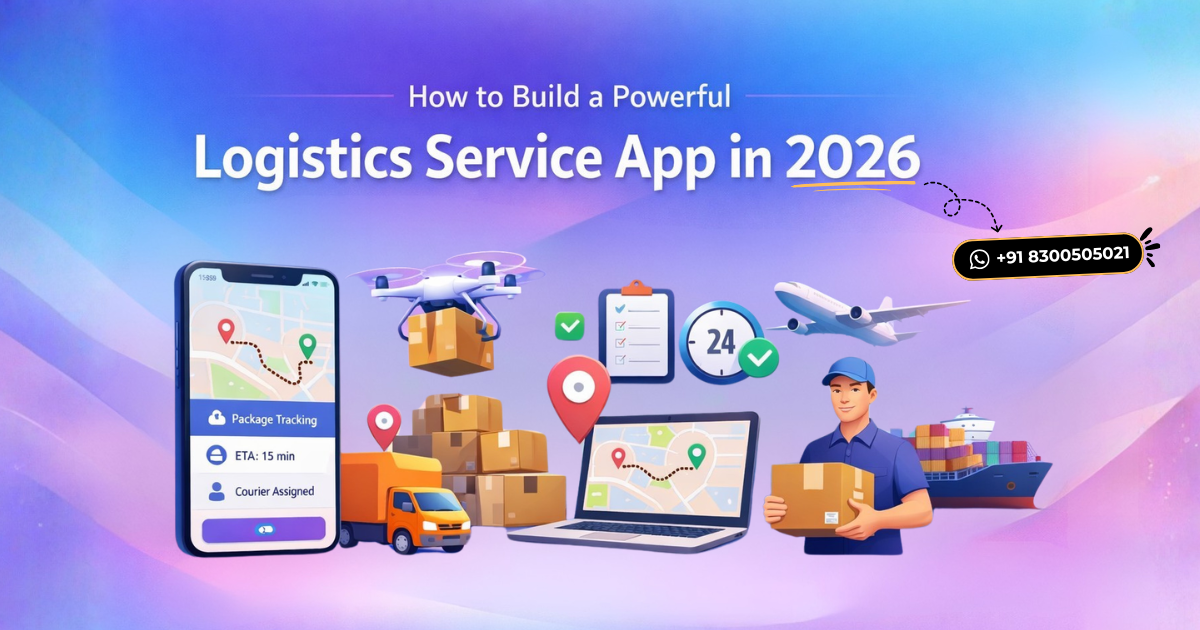
The industry of transportation and delivery is developing further because of automation, real-time tracking, and smart fleet.
Companies are moving towards digital platforms to enhance efficiency, lower costs, and the provision of superior customer experiences.
In case you are planning to create a logistics service app, this guide will discuss the main points that you must know, such as the business models, functionality and features, development strategy, and monetization.
Why Invest in a Logistics Service App?
The trend is increasing the demand for logistics solutions because of:
- Blistering development of eCommerce.
- Emerging complexity in global trade and supply chains.
- Increased demands to have quicker and more open deliveries.
- Implantation of AI in the route optimization and demand forecasting.
The example of such established companies as Uber, FedEx, and DHL shows that the digital platform may help to simplify the work of a logistics company and increase customer satisfaction.
A logistics application can enable companies to deal with orders, drivers, fleets, warehouses, and payment all in one place.
How to Build a Logistics App Step-By-Step?
- Select the Right Business Model.
The choice of an adequate model determines the form of your platform, attributes, and monetization plan.
- B2B Logistics Platform
It is used in the operations of transporting goods in bulk and supply chain between businesses.
- B2C Courier & Parcel Delivery
Centered on direct deliveries to the individual customers.
- On-Demand Delivery Service
Allows delivery of goods on the same day or instant e.g. food, groceries, or packages.
- Fleet Management System
Keeps track of businesses, vehicles, drivers, and efficiency.
- Freight Marketplace
Relates shippers to transport providers in order to book and monitor the loads in an effective manner.
- Multi-Vendor Platform
Enables several service providers to co-exist in one ecosystem.
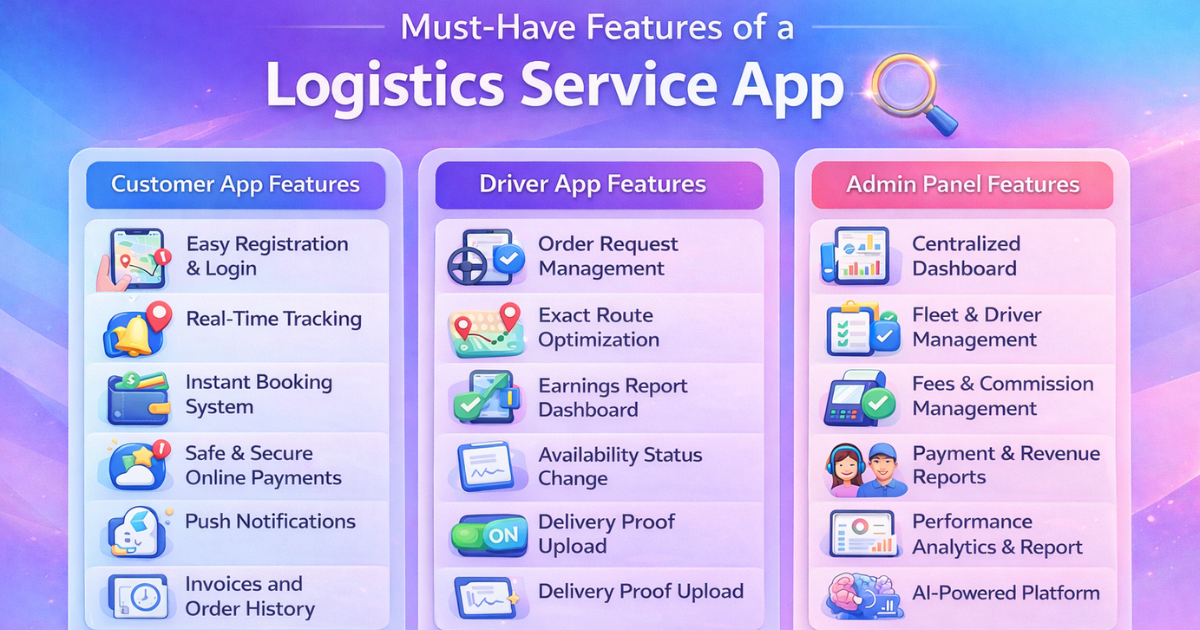
Features of a Logistics Service App.
Customer App
- Easy registration and login
- Real-time shipment tracking
- Quick booking system
- Estimated delivery time (ETA)
- Secure payment options
- Push notifications
- Order history and invoices
Driver App
- Order request management
- Route optimization with GPS
- In-app navigation
- Earnings dashboard
- Status control in availabilities.
- Proof of delivery upload
Admin Panel
- Centralized dashboard
- Fleet and driver management
- Commission and pricing control.
- Payment and revenue reports.
- Performance analytics
- Artificial intelligence demand and routing.
Popular Models of Logistics Apps
Numerous companies follow the established principles to speed up the launch:
- On-demand trucking websites (following the footsteps of digital trucking solutions)
- Small business delivery systems that are hyperlocal.
- Rapid delivery systems of urgent deliveries.
- Last-mile logistics delivery apps on demand.
Advantages of a Logistics Service App
- Improved Efficiency
Automation helps in minimizing the fear of manual work and enhances faster delivery.
- More Dollar-Making Opportunities.
Several revenue points like commissions, subscriptions and service fees.
- Real-Time Visibility
Live tracking enhances customer confidence and transparency.
- Optimized Fleet Management
A centralized control assists in tracking the vehicles and also lowers the cost of running the vehicles.
- Smart Route Optimization
Artificial Intelligence routing minimizes the delivery time and fuel.
- Data-Driven Insights
Analytics assists in enhancing performance, pricing and decision making.
- Scalability
Grow your business easily by expanding operations.
- Enhanced User Experience
Quicker reservation, safe payment and updating help to enhance customer satisfaction.
Why choose Sangvish to develop Logistics Apps?
Selecting an appropriate development partner is important in the creation of a solid and scalable platform. Sangvish provides ready-made and tailor-made logistics app solutions that could make the development of an app simpler and faster to launch.
- Customizable & Scalable
Constructed to be flexible to various business models and future expansion.
- Dedicated Support
Continuous technical support and services.
- Feature-Rich Solutions
Comes with such important tools including tracking, dispatch, and analytics.
- Faster Deployment
Off-the-shelf solutions save on development time.
FAQ (Frequently Asked Questions)
- What does a logistics service app mean?
A platform that handles transportation, deliveries, tracking and operations via mobile and web applications.
- How long does it take to develop an app?
The development of custom can require a couple of months, whereas ready-made solutions can be started much faster.
- What features are essential?
Live shipping, shipment optimization, safe payment and management controls.
- Is AI necessary?
The AI will increase efficiency, minimize the costs, and improve the accuracy of delivery.
- Can I start a small business with it?
Yes, most business ventures start with a narrow-minded model and grow with time.
Final Thoughts
To create the logistics service app that is successful, one needs:
- User-friendly design
- In-time monitoring features.
- Firm administrative direction.
- Scalable technology infrastructure.
The appropriate approach and tools will help a logistics app to reduce operations, enhance customer experiences, and contribute to the long-term business development.

You may also like
Uber Freight Clone App Development – Complete Business Guide
Uber Freight Clone App Development – Complete Business Guide
This growing demand has created a strong opportunity for startups and logistics companies to launch...
Porter Clone App for On-Demand Logistics & Delivery
Porter Clone App for On-Demand Logistics & Delivery
A Porter Clone App is a ready-made on-demand logistics solution that allows businesses to launch...