


Cart 0
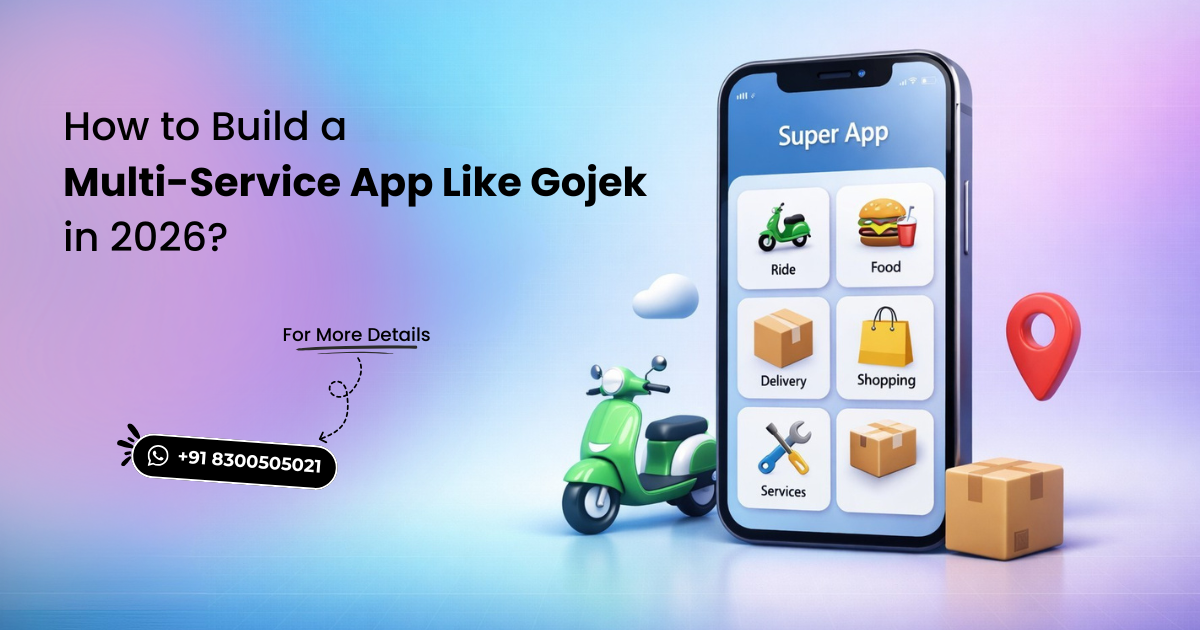
One of the most successful multi-service app is Gojek, which offers services such as ride-hailing, food and grocery delivery, digital payments, courier services, and more — all on a single platform.
For entrepreneurs and startups, building a multi-service app like Gojek can unlock huge business opportunities. However, creating such a complex application from scratch requires significant time, technical expertise, and investment.
A Gojek clone app offers a faster and cost-effective solution. It is a ready-made platform that includes the core features required to launch a multi-service marketplace quickly.
In this guide, we will explore how to build a multi-service app like Gojek, including key features, development steps, business models, and monetization strategies.
What is a Gojek Clone App?
A Gojek clone app is a pre-built, multi-service software solution that replicates the Gojek platform’s essential functionality. It allows businesses to offer multiple on-demand services through a single mobile application.
Instead of developing everything from scratch, entrepreneurs can customize the clone app according to their business model and brand identity.
Types of Panels in a Gojek Clone App
Typically, a Gojek clone app includes three main panels:
1. User Panel
The user panel is designed for customers who want to book services.
Key features include:
- Easy registration and login
- Access to multiple services in one app
- Real-time tracking of drivers or service providers
- Secure payment options
- Ratings and reviews system
- Booking history and notifications
A smooth and user-friendly interface ensures higher customer engagement and retention.
2. Service Provider Panel
This panel is used by drivers, delivery partners, and service providers.
Important features include:
- Accept or reject service requests
- Navigation support through GPS
- Earnings dashboard
- Service availability toggle
- Notifications for new bookings
An efficient provider panel ensures better productivity and service quality.
3. Admin Panel
The admin panel acts as the control center of the entire platform.
Key functionalities include:
- User and provider management
- Commission and pricing management
- Revenue and performance analytics
- Service configuration
- Complaint and dispute resolution
A powerful admin dashboard helps businesses manage operations smoothly and scale efficiently.
Why Build an App Like Gojek?
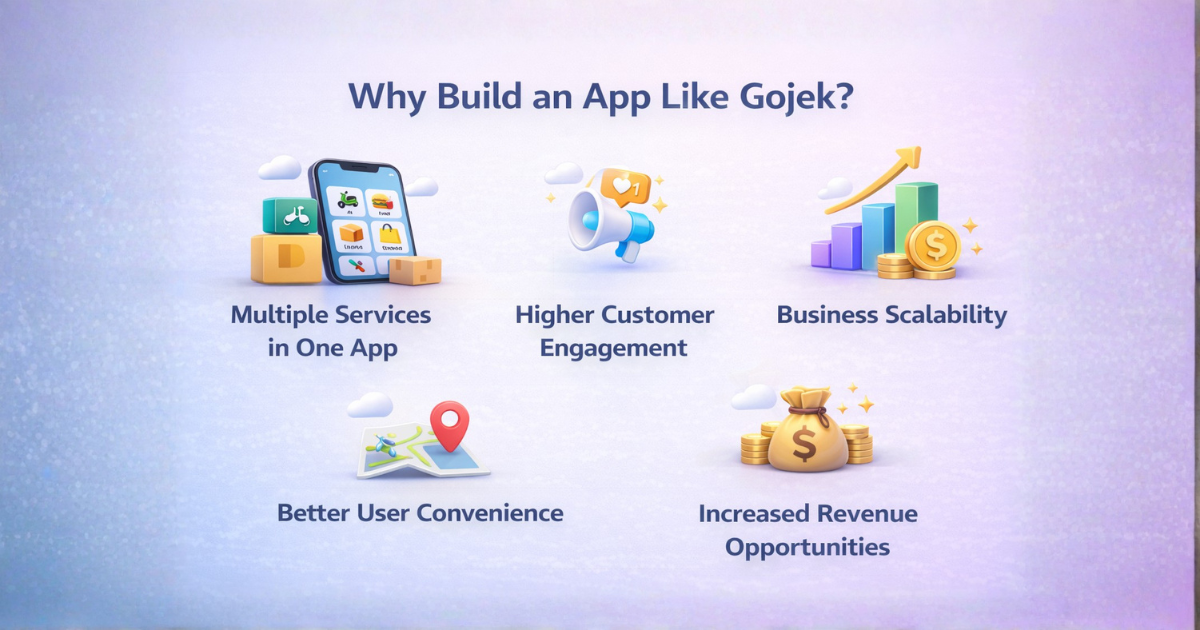
Super apps are becoming increasingly popular worldwide because they offer multiple services in a single platform.
Here are some major reasons entrepreneurs invest in Gojek-like apps:
1. Multiple Services in One App
Users can book rides, order food, buy groceries, schedule home services, and make payments without switching between apps.
2. Higher Customer Engagement
Providing multiple services increases user engagement and encourages customers to use the platform regularly.
3. Business Scalability
Entrepreneurs can start with a few services and gradually add more as their business grows.
4. Better User Convenience
Super apps provide a seamless experience with easy navigation, fast bookings, and multiple payment options.
5. Increased Revenue Opportunities
A multi-service platform generates revenue from various sources, improving overall profitability.
Essential Features for a Successful Gojek-Like App
To build a successful multi-service platform, the application must include advanced features that enhance the user experience.
Real-Time Tracking
Customers should be able to track drivers or delivery partners live using GPS integration.
Multiple Payment Methods
Support payment options such as:
- Credit / Debit Cards
- Digital Wallets
- UPI Payments
- Cash on Delivery
Flexible payment options improve customer satisfaction.
Service Scheduling
Users should have the ability to schedule services in advance, such as booking airport rides or grocery deliveries.
In-App Communication
Chat and call features help users communicate with service providers without sharing personal contact details.
Ratings and Reviews
A transparent feedback system ensures service quality and builds trust among users.
Push Notifications
Push notifications inform users about:
- Booking confirmations
- Order updates
- Promotions and discounts
- Driver arrival alerts
Loyalty and Referral Programs
Rewarding loyal users with points, discounts, or referral bonuses helps increase user acquisition and retention.
Safety Features
Security is a critical factor for on-demand platforms. Essential safety features include:
- Verified service providers
- Emergency SOS button
- Live location tracking
- Secure payments
Step-by-Step Process to Build a Multi-Service App Like Gojek
Step 1: Conduct Market Research
Before starting development, analyze:
- Target audience
- Market demand
- Competitor platforms
- Customer pain points
Market research helps you build a platform that meets real customer needs.
Step 2: Choose the Right Development Approach
You can build your app using:
- Native development (Android & iOS)
- Cross-platform frameworks
- Web-based platforms
The choice depends on your budget and target audience.
Step 3: Define Features and Services
Identify which services your platform will offer, such as:
- Ride booking
- Food delivery
- Grocery delivery
- Medicine delivery
- Courier services
- Home maintenance services
Starting with a few services allows easier scaling later.
Step 4: Select the Technology Stack
A powerful technology stack is required to support multiple services within a single application.
Common technologies include:
Programming Languages
- Swift
- Java
- Kotlin
- Golang
Frameworks & Tools
- Laravel
- Spring
- Kafka
- Rails
Other Tools
- Google Maps API
- Firebase
- Google Analytics
- MailChimp
The right technology stack ensures high performance, scalability, and security.
Step 5: Design UI/UX and Wireframes
Wireframes help visualize the structure of your app before development begins.
This stage includes:
- Navigation flow
- Screen layouts
- Button placements
- User interactions
A well-designed UI improves usability and enhances the user experience.
Step 6: Development and Integration
During development, the team builds:
- Frontend interfaces
- Backend infrastructure
- API integrations
- Payment gateways
- GPS tracking systems
This stage transforms the wireframes into a fully functional application.
Step 7: Testing and Quality Assurance
Before launching the app, it must undergo thorough testing to ensure it works smoothly across devices.
Testing includes:
- Performance testing
- Security testing
- Bug fixing
- Beta testing with real users
This ensures a stable and reliable platform.
Step 8: Launch and Marketing
Once development is complete, launch the app with a strong marketing strategy.
Promotion channels may include:
- Social media campaigns
- Influencer partnerships
- Referral programs
- Paid advertisements
- App store optimization
A well-planned launch helps attract early users and build brand awareness.
How a Gojek-Like App Makes Money?
A multi-service platform can generate revenue through multiple streams.
Customer Service Fees
Users pay a small fee for every service they book through the app.
Commission from Businesses
The platform earns a commission from vendors and service providers for each successful order.
Delivery Charges
Drivers or delivery partners may share a small portion of their earnings with the platform.
In-App Advertising
Businesses can promote their services through sponsored listings or advertisements.
Subscription Plans
Premium memberships can provide exclusive benefits such as discounts or priority bookings.
Conclusion
Building a multi-service app like Gojek is an excellent opportunity for entrepreneurs looking to enter the on-demand economy. Super apps provide users with a convenient way to access multiple services through a single platform.
With the right strategy, technology, and marketing approach, your Gojek-like super app can grow into a profitable and scalable business.

You may also like

Gojek Clone App Development – Key Features and Benefits
Gojek Clone App Development – Key Features and Benefits
In the fast-moving modern lives, convenience has become the ultimate comfort. Everyone requires solutions that...