




Cart 0
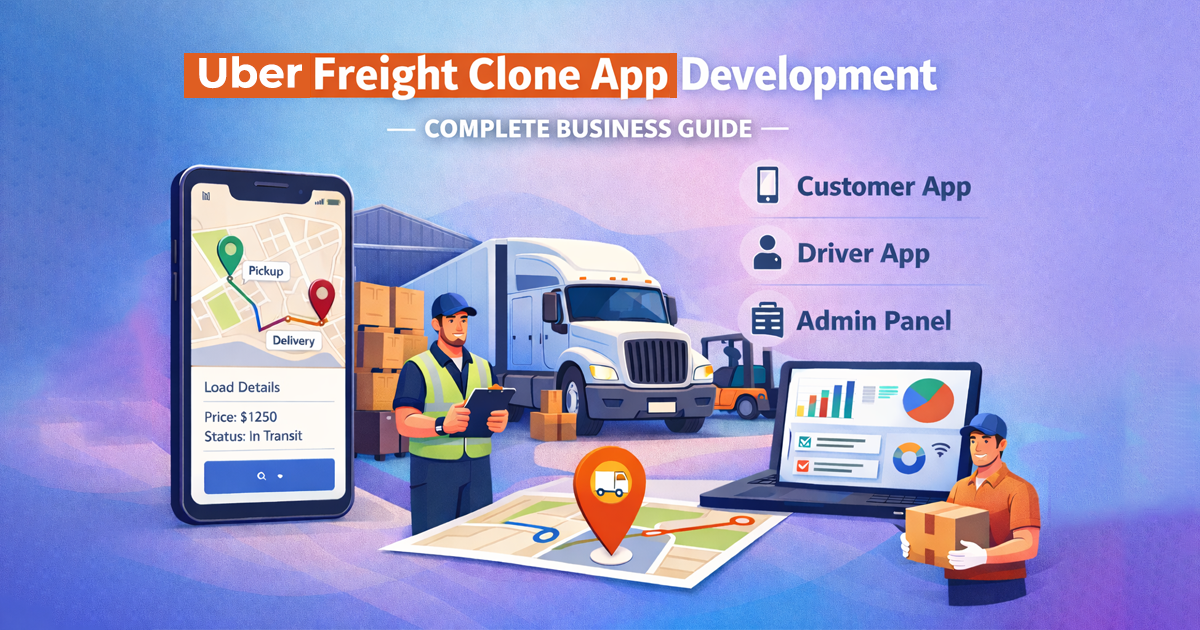
This growing demand has created a strong opportunity for startups and logistics companies to launch an Uber Freight Clone App. This platform replicates the core business model while allowing customization for regional, niche, or enterprise needs.
This complete business guide explains what an Uber Freight clone is, how it works, its features, development cost, monetization models, benefits, challenges, and how to launch successfully.
What is an Uber Freight Clone App?
An Uber Freight clone app is a digital logistics marketplace that connects shippers (businesses needing freight transport) with carriers/ truckers.
Unlike traditional freight brokers, a clone app uses technology to automate matching, pricing, tracking, and payments — reducing inefficiencies and enabling transparency.
In essence, it’s a two‑sided marketplace platform with smartphone apps and a centralized dashboard that operates like Uber but for freight.
Why Build a Freight Marketplace App in 2026?
The Logistics clone app is one of the largest sectors globally, yet many parts of it remain inefficient, fragmented, and outdated. Here’s why now is the time:
• Growing E‑commerce Demand: More online purchases mean greater shipping needs.
• Driver Shortages: Carriers want faster load discovery and fair pricing.
• Digital Transformation: Traditional brokers are moving to digital platforms.
• Lower Barriers to Entry: Cloud, AI, and APIs make development more affordable.
How Does an Uber Freight Clone App Work?
Understanding the workflow is essential for both business owners and investors.
Step-by-Step Workflow
• Shipper Posts a Load
The shipper enters the pickup location, drop location, cargo type, weight, and delivery timeline.
• System Matches Available Trucks
The platform algorithm matches the load with nearby available truckers based on location, vehicle type, and capacity.
• Instant Pricing & Booking
Shippers see transparent pricing and book instantly—no negotiation required.
• Driver Accepts the Load
Truck drivers receive load details and accept the job through the app.
• Live Tracking & Updates
GPS tracking allows shippers to monitor shipment progress in real time.
• Delivery & Digital Payment
Once delivery is completed, payment is processed automatically through the app.
This automated process removes delays, reduces costs, and improves efficiency.
Market Overview & Demand Drivers
Global Logistics Market Insights
• The global logistics market is projected to reach trillions by 2030.
• Digital freight platforms are one of the fastest‑growing segments within this space.
Demand Drivers
• Real‑Time Tracking Expectations: Shippers now expect live visibility.
• Lower Operational Costs: Automated quoting vs. manual phone calls.
• Flexibility & Transparency: Carriers choose loads that suit them.
• Global Trade Expansion: Cross‑border freight needs are rising.
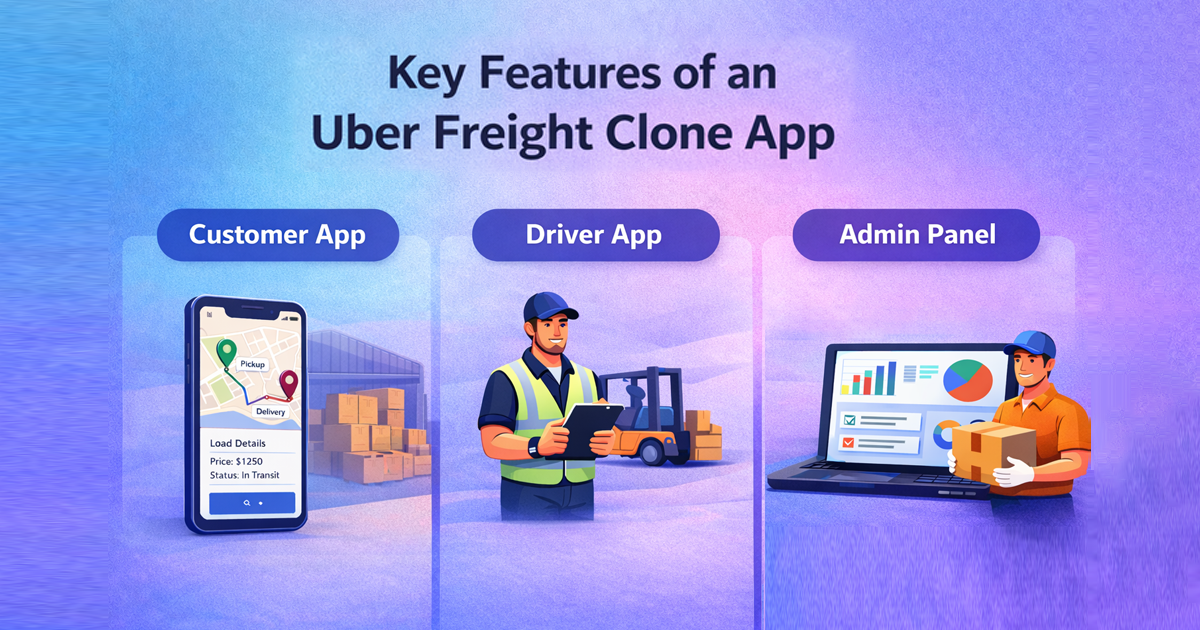
Key Features of an Uber Freight Clone App
Below, we break down the essential features based on user roles.
A. Customer App
The customer app is designed for businesses or individuals who need to transport goods. Its main goal is to make freight booking simple, transparent, and fast.
1️⃣ User Registration & Profile
Shippers can create an account using email, phone number, or social login.
The profile includes:
• Company details
• Billing information
• Shipping history
• Preferred routes
This helps streamline repeat bookings and improves trust in the platform.
2️⃣ Instant Freight Quoting
This feature provides real-time price estimates based on:
• Pickup & drop location
• Distance
• Load weight & dimensions
• Vehicle type
• Demand conditions
An AI-powered pricing engine ensures competitive and transparent rates.
3️⃣ Load Posting
Shippers can post shipment details such as:
• Cargo type
• Pickup time
• Delivery deadline
• Special handling instructions
Once posted, carriers can view and accept the load instantly.
4️⃣ Search & Filter Carriers
Shippers can search carriers using filters like:
• Ratings
• Vehicle type
• Route specialization
• Price range
• Availability
This increases control and flexibility in choosing transport partners.
5️⃣ Live Tracking
GPS-based real-time tracking allows shippers to:
• Monitor shipment progress
• Get the estimated arrival time
• Receive delay alerts
Live visibility increases operational transparency.
6️⃣ Cost Estimation
Before booking, shippers can view a cost breakdown:
• Base fare
• Distance charges
• Toll fees
• Platform commission
• Taxes
This prevents pricing confusion and builds trust.
7️⃣ Booking & Scheduling
Shippers can:
• Book immediately
• Schedule shipments for later
• Modify or cancel bookings
Scheduled freight is especially useful for businesses managing supply chains.
8️⃣ In-App Messaging
Direct chat between shipper and carrier allows:
• Clarifications
• Delivery instructions
• Issue resolution
Secure messaging reduces miscommunication.
9️⃣ Payment Integration
Supports multiple payment options:
• Credit/Debit Cards
• Net banking
• Digital wallets
• Corporate invoicing
Secure payment gateways ensure smooth transactions.
🔟 Ratings & Reviews
After delivery, shippers can rate carriers based on:
• Timeliness
• Professionalism
• Cargo safety
This improves quality control across the platform.
B. Driver App
The driver app is built for truck owners and drivers who want to find loads efficiently and maximize earnings.
1️⃣ Driver Onboarding with Documents
Drivers must upload:
• Driving license
• Vehicle registration
• Insurance documents
• Compliance certificates
Admin verification ensures only qualified carriers join the platform.
2️⃣ Load Discovery Board
Drivers can browse available shipments with:
• Route details
• Cargo weight
• Offered price
• Pickup deadline
This acts like a real-time freight marketplace.
3️⃣ Accept / Decline Shipments
Drivers can:
• Accept loads instantly
• Negotiate (if enabled)
• Decline based on schedule
This gives flexibility and autonomy.
4️⃣ Navigation & Routing
Integrated maps provide:
• Optimized routes
• Traffic updates
• Toll road alerts
• Fuel stop suggestions
This reduces delays and fuel costs.
5️⃣ Proof of Delivery (POD)
Upon delivery, drivers upload:
• Digital signatures
• Photo evidence
• Delivery notes
This confirms successful completion and triggers payment release.
6️⃣ Earnings Dashboard
Drivers can track:
• Completed shipments
• Pending payments
• Weekly/monthly earnings
• Incentives & bonuses
This transparency increases driver engagement.
7️⃣ Chat with Shippers
In-app communication ensures:
• Pickup coordination
• Route changes
• Emergency updates
Everything stays documented within the system.
8️⃣ Alerts & Notifications
Drivers receive instant alerts for:
• New loads
• Payment confirmations
• Route changes
• Delivery reminders
Push notifications keep them active and responsive.
C. Admin Panel
The admin dashboard is the control center of the entire logistics marketplace.
1️⃣ User & Load Management
Admins can:
• Approve or block users
• Monitor shipments
• Edit load details
• Resolve disputes
This ensures smooth platform operations.
2️⃣ Pricing Engine Control
Admins can manage:
• Commission percentages
• Dynamic pricing rules
• Surge pricing triggers
• Distance-based calculations
This directly impacts profitability.
3️⃣ Analytics & Reports
The dashboard provides:
• Revenue reports
• Load volume statistics
• Carrier performance metrics
• Customer retention data
• Peak demand analysis
These insights help in strategic decision-making.
4️⃣ Fraud & Compliance Controls
Admins can:
• Detect suspicious activities
• Monitor fake bookings
• Verify insurance compliance
• Prevent payment fraud
Security and compliance are critical in freight logistics.
5️⃣ Driver Ratings & Reviews System
Admins monitor feedback and:
• Suspend low-rated drivers
• Reward top performers
• Investigate disputes
Maintains marketplace quality.
6️⃣ Support & Ticketing Center
Centralized system for:
• Complaint resolution
• Technical support
• Payment disputes
• Shipment issues
A responsive support system builds long-term trust.
Why Is the Uber Freight Business Model So Popular?
The popularity of Uber Freight–style platforms is driven by real industy problems.
Key Pain Points It Solves
- Manual freight booking
- Lack of price transparency
- Delayed payments to drivers
- Inefficient load matching
- Dependency on brokers
Why Businesses Prefer It?
- Faster delivery cycles
- Reduced logistics costs
- Better truck utilization
- Data-driven decision making
As a result, logistics startups, enterprises, and regional transport operators are actively investing in Uber Freight clone app development.
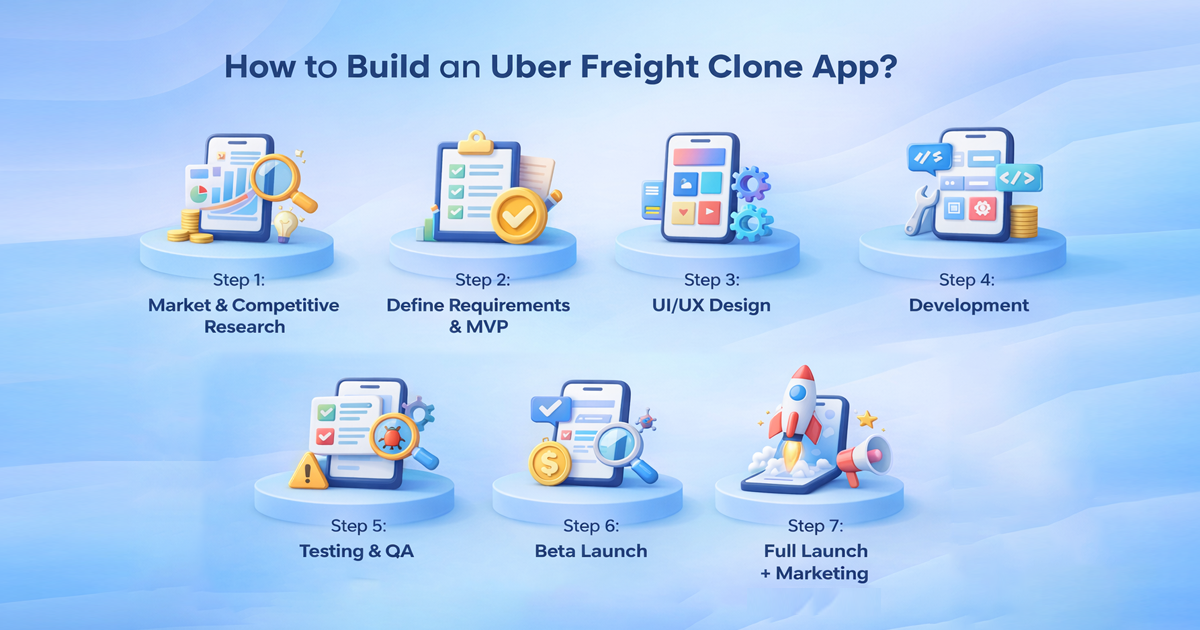
How to Build an Uber Freight Clone App?
Step 1: Market & Competitive Research
Analyze competitors, policies, pricing, and user reviews.
Step 2: Define Requirements & MVP
Select core features — keep your MVP lean to launch faster.
Step 3: UI/UX Design
Focus on simplicity for both shippers and drivers.
Step 4: Backend & Frontend Engineering
Leverage agile development sprints.
Step 5: Testing & QA
Manual and automated testing for bugs and performance.
Step 6: Beta Launch
Collect feedback and refine.
Step 7: Full Launch + Marketing
Deploy to App Stores and roll out your growth campaigns.
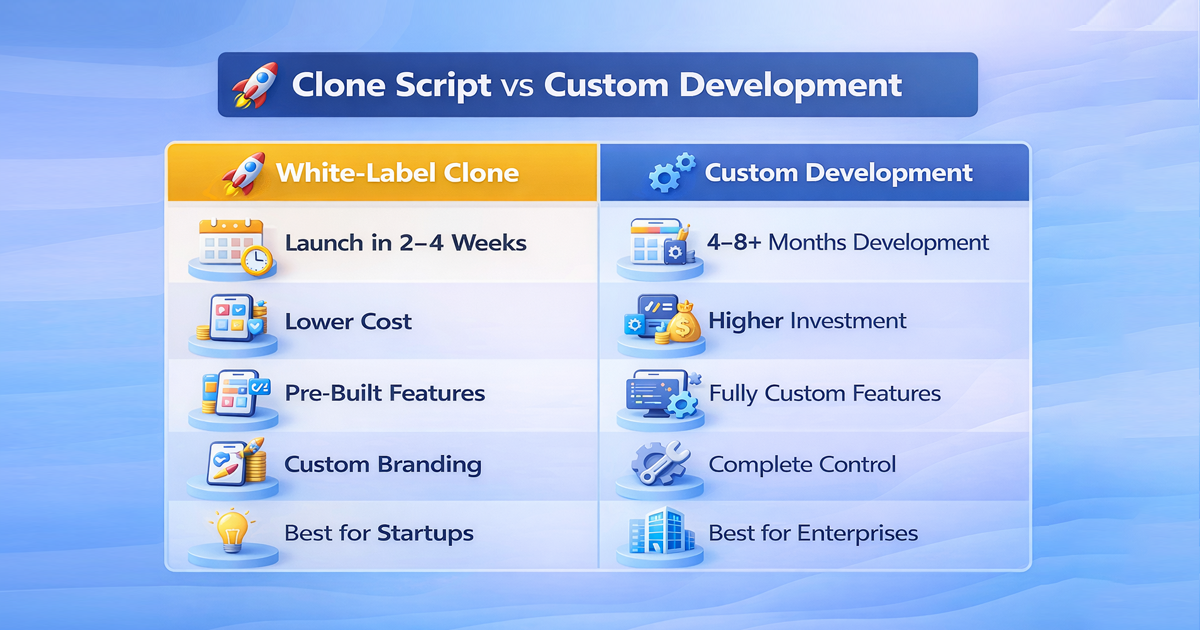
Development Approach: Clone Script vs Custom Development
| Criteria | White-Label Uber Freight Clone | Custom App Development |
| Launch Time | Faster launch (2–4 weeks) | Longer development cycle (4–8+ months) |
| Development Cost | Lower upfront investment | Higher development cost |
| Core Features | Pre-built essential freight marketplace features | Built from scratch based on requirements |
| Customization Level | Custom branding, UI changes, add-on modules possible | Fully tailored architecture and features |
| Scalability | Scalable with modular upgrades | Highly scalable with complete flexibility |
| Best For | Startups & small businesses entering the market quickly | Large enterprises with unique operational needs |
| Technical Control | Limited backend control | Full control over infrastructure & code |
| Maintenance | Vendor-supported updates | In-house or dedicated development team required |
Monetization Models for an Uber Freight Clone App
Your platform can generate revenue in multiple ways:
• Commission per Load
Percentage charged from each completed shipment.
• Subscription Plans
Monthly or yearly plans for shippers or fleet owners.
• Premium Listings
Priority visibility for truckers or logistics companies.
• Service Fees
Platform usage or booking fees.
• Enterprise SaaS Licensing
Selling the platform to logistics companies as software.
A hybrid monetization model often yields the best ROI.
Challenges in Uber Freight Clone App Development
While the opportunity is large, there are challenges:
• Driver onboarding and retention
• Pricing accuracy
• Regional transport regulations
• Marketplace liquidity (balancing supply & demand)
These challenges can be addressed through strong onboarding strategies, marketing, and technology optimization.
Final Thoughts
The logistics industry is rapidly moving toward digital freight marketplaces, and the Uber Freight business model has proven its global scalability. Launching an Uber Freight Clone App allows startups and logistics companies to enter this high-growth market with reduced risk, faster time-to-market, and strong revenue potential.
With the right technology, features, and launch strategy, an Uber Freight clone can become a powerful logistics platform in regional and international markets.
Frequently Asked Questions (FAQ)
What is an Uber Freight clone app?
An Uber Freight clone app is a digital platform that connects shippers and truck drivers for on-demand freight booking with real-time pricing and tracking.
Is an Uber Freight clone profitable?
Yes, with proper pricing, region selection, and monetization strategy, it can generate consistent B2B revenue.
How long does development take?
White-label solutions can be launched in 2–4 weeks, while custom development may take 4–6 months.
Can I launch in Asia or Europe?
Yes. Uber Freight clone apps are especially well-suited to Asian and European logistics markets given the fragmented transport systems there.
What is the minimum investment required?
An MVP can be launched with an investment of $20,000 or more using a white-label solution.

You may also like
Logistics App Development 2026 – Cost, Features & Guide
Logistics App Development 2026 – Cost, Features & Guide
The industry of transportation and delivery is developing further because of automation, real-time tracking, and...
Porter Clone App for On-Demand Logistics & Delivery
Porter Clone App for On-Demand Logistics & Delivery
A Porter Clone App is a ready-made on-demand logistics solution that allows businesses to launch...